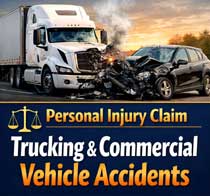
 In California, personal injury claims resulting from Trucking & Commercial Vehicle Accidents are regulated by a combination of state tort law, vehicle statutes, and federal trucking regulations. Due to the extensive regulations governing commercial trucking, these cases tend to be more intricate than typical car accidents.
- Legal Foundation for Injury Claims
Injuries from truck accidents are generally pursued under civil personal injury law, primarily focusing on:
- Negligence
- Negligence per se (breach of safety laws)
- Vicarious liability (responsibility of the employer)
- Product liability (issues with defective trucks or components)
- Significant California Statutes
- California Vehicle Code (CVC)
Key provisions include:
- CVC §22406 – Truck speed limits
- CVC §34500–34520 – Safety mandates for commercial vehicles
- CVC §23152 – DUI regulations (stricter limits for commercial drivers)
- CVC §21702 – Tailgating
Breaching these laws can demonstrate negligence per se.
- California Civil Code
- Civil Code §1714 – General duty of care
- This establishes accountability for negligent or reckless driving.
Helping Clients in Los Angeles, High Desert, Riverside County, San Bernardino, Apple Valley and Entire Inland Empire
Call Us: 951-218-4083 Or 909-890-2350
- Federal Regulations (FMCSA Guidelines)
California adheres to the Federal Motor Carrier Safety Administration (FMCSA) regulations for interstate trucking:
Key federal guidelines include:
- Hours of Service (49 CFR §395) – Restrictions on driving hours
- Driver qualification standards (49 CFR §391)
- Vehicle inspection and maintenance requirements (49 CFR §396)
- Cargo securement standards (49 CFR §393)
Infringement of FMCSA regulations significantly bolsters liability claims.
- Potentially Liable Parties
In contrast to standard accidents, several parties may be held accountable:
- Truck driver
- Trucking company (employer)
- Cargo loading firm
- Vehicle maintenance service
- Manufacturer of the truck or its parts
- Broker or shipper
California employs the doctrine of respondeat superior, holding employers responsible for their employees’ negligence while on duty.
- Comparative Fault Principle
California practices pure comparative negligence:
- Even if the injured party shares some fault, they are still entitled to seek damages.
- Compensation will be adjusted based on the degree of fault.
The process of Personal Injury Claim in California can be complex. It is advisable to begin the process promptly to avoid complications. Consulting a qualified Personal Injury Lawyer who has knowledge of procedure like Law Office of Antoniette Jauregui . You can also call her at 951-218-4083 or 909-890-2350 to determine the legal process.
Or you can Contact Us through the following form:
The information given in this blog does not constitute the legal advice and this blog is not part of the services provided on this website. It might not be up-to-date and is provided here on free of cost on honorary basis and is not for profit. You may contact your attorney for professional advise. For more details, please visit Terms & Conditions, Privacy Policy and How we deal with Intellectual property page through the link given at the footer area of the website.